
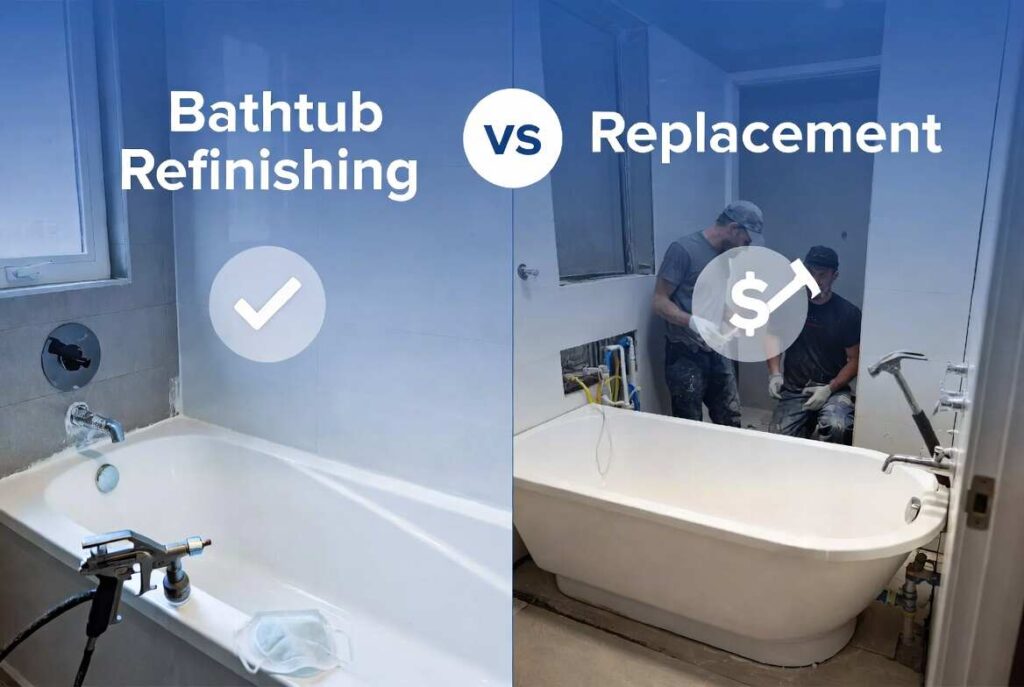
Homeowners often face a tough choice when their bathtub shows signs of wear like stains, chips, or a dull surface. The question comes down to bathtub refinishing vs replacement. Both options can update your bathroom, but they differ in price, effort, results, and long-term value. This guide walks through every key aspect with clear facts so you can pick the right path for your home and budget.
Understanding Bathtub Refinishing
Bathtub refinishing, also known as reglazing or resurfacing, applies a fresh coating to your existing tub. Workers first clean and prepare the surface, fix small imperfections, then spray or brush on a durable new finish. The result looks like a new tub without removing the old one.
This method works on many materials, including cast iron, acrylic, fiberglass, and porcelain. Professionals use strong coatings that bond well and resist everyday use. The process usually happens right in your bathroom, so the tub stays in place. Most jobs finish in a few hours, with the tub ready for light use soon after.
People choose refinishing to fix cosmetic problems such as yellowing, minor scratches, or outdated colors. It gives the bathroom a clean, updated appearance fast. The coating creates a smooth, glossy surface that feels nice and cleans easily with mild products. Many homeowners report that a good refinishing job makes the tub look factory-new.
Understanding Bathtub Replacement
Bathtub replacement means taking out the old tub and putting in a new one. This involves removing the fixture, handling plumbing connections, and often fixing or updating the surrounding walls, floor, and tile. You select a new tub in the size, style, and material you want.
New tubs come in many types, such as alcove models that fit between three walls, freestanding tubs that stand alone, drop-in styles, or walk-in options with doors for easier access. Materials range from lightweight acrylic and fiberglass to heavy cast iron or solid surface options. Each has different strengths in heat retention, durability, and feel.
Replacement lets you change the entire setup. You can switch to a deeper soaking tub, add jets, or adjust the layout for better flow in the bathroom. It addresses structural problems that refinishing cannot fix, like cracks that go all the way through or leaks affecting the floor below.
Cost Breakdown: Bathtub Refinishing vs Replacement
Money plays a big role in the decision. Professional bathtub refinishing typically costs between $300 and $800 for a standard tub. This price covers labor, materials, and preparation. Some jobs run a bit higher if the tub needs extra repairs or custom colors.
In contrast, full bathtub replacement often totals $1,500 to $5,000 or more. The new tub itself might cost $200 to $2,000 depending on the type and features. Add labor for removal, plumbing work, tile repairs, disposal, and possible floor fixes, and the numbers climb quickly. Complex jobs in older homes can exceed $8,000 when unexpected issues appear.
Refinishing saves a lot upfront. Many people spend 70% to 80% less by choosing this route instead of replacement. Over time, the lower initial cost makes refinishing attractive for budget-conscious families or rental property owners who want quick updates without big spending.
Replacement costs more but may offer better value in some situations. A high-quality new tub lasts longer and can raise home resale appeal during a full bathroom remodel. Factor in potential savings on future repairs if the old tub had hidden problems. Always get quotes for both options from local professionals to see exact numbers for your home.
Must read: Bathtub Repair Guide
Time and Disruption Levels
Time matters, especially if your household has only one bathroom. Refinishing usually takes one day. Technicians arrive, prepare the area, apply the coating, and leave. You may need to stay out of the bathroom for 24 to 48 hours while the finish cures fully.
Replacement takes much longer. The project can stretch over several days to a week or more. Removal of the old tub creates dust and noise. Plumbing work, setting the new tub, and finishing walls or floors add time. Families often need to find other bathing arrangements during this period.
Minimal mess is a big plus for refinishing. No heavy demolition means less dust and debris to clean up afterward. Replacement involves hauling out heavy materials and possible wall or floor damage, which creates more cleanup and potential repairs.
Durability and Expected Lifespan
A professionally refinished tub lasts 10 to 15 years with good care. The new surface holds up against normal use, but it can chip if hit hard or cleaned with harsh tools. Avoid abrasive cleaners and suction-cup mats to protect the finish.
New tubs provide longer life. Quality cast iron models can last 25 to 50 years or more. Acrylic and fiberglass options typically give 15 to 30 years of service. The exact lifespan depends on material quality, installation, and maintenance habits.
Refinishing can be done again later on the same tub, extending its total useful life. This option keeps costs low across decades. Replacement gives a fresh start but at a higher price for that extended durability.
Step-by-Step Refinishing Process
Professionals follow a careful sequence to get good results. They start by removing hardware like faucets and drain covers, then clear old caulk. Thorough cleaning removes soap scum, oils, and dirt that could stop the new coating from sticking.
Next comes repair work. Small chips and cracks get filled with epoxy or special putty. The surface is sanded or etched to create texture for strong bonding. Masking protects walls and floors from overspray.
Primer goes on first in thin layers. Then the topcoat follows, often applied with a spray gun for a smooth, even finish. Multiple coats build thickness and durability. The tub cures for a day or two before use. Final caulking seals edges.
Good preparation makes the difference between a finish that lasts and one that peels early. Professionals have the right tools and experience to handle this well.
What Happens During Bathtub Replacement
Replacement starts with shutting off water and disconnecting plumbing. Workers remove the old tub, which may require cutting it in pieces if it is built-in tightly. They dispose of the old fixture and check the area for damage to subfloor or walls.
New plumbing connections get made if needed. The new tub is set in place, leveled, and secured. Tile or surround work follows to make everything watertight. Faucets and hardware install last, followed by testing for leaks.
The process varies by tub type. Freestanding models need different support than alcove styles. Heavy cast iron tubs may call for floor reinforcement. Planning ahead helps avoid surprises.
Pros and Cons of Each Approach
Refinishing pros include lower cost, speed, and little mess. It keeps your current tub, preserves original features like clawfoot designs, and reduces waste. Cons include shorter lifespan and inability to fix major structural issues. The finish can wear over time.
Replacement pros cover full renewal, longer life, and design freedom. You solve hidden problems and customize the bathroom. Cons are higher expense, more time, greater disruption, and more construction waste.
When Refinishing Makes the Most Sense
Choose refinishing when the tub structure is solid but the surface looks bad. Minor chips, stains, or color changes respond well. It fits tight budgets, rental properties, or homes where you want quick results without major work.
Older homes with classic cast iron tubs benefit from refinishing to keep character while updating appearance. If you plan to sell soon, this option boosts curb appeal fast at low cost.
When Replacement Is the Better Choice
Go for replacement if the tub has deep cracks, leaks, or soft spots indicating water damage underneath. Structural problems will return if ignored. Full bathroom remodels also favor new fixtures for matching styles and layouts.
You may want replacement to change tub size, add accessibility features, or switch materials for better performance. Long-term homeowners who value maximum durability often pick this route.
Environmental Considerations
Refinishing helps the environment by keeping the old tub out of landfills. No demolition means less construction debris and lower demand for new materials and energy to manufacture replacements.
Replacement creates more waste from the old tub, broken tile, and packaging. Manufacturing and shipping a new tub uses resources and produces emissions. If you replace, look for ways to recycle or donate the old fixture.
Many people see refinishing as the greener option for cosmetic updates. It extends the life of what you already have.
Maintenance Tips for Long-Term Results
After refinishing, clean with mild soap and soft cloths. Skip abrasive pads and strong chemicals that scratch the surface. Fix leaks quickly to prevent water damage. Use bath mats without suction cups.
New tubs need similar gentle care, though some materials handle more abuse. Regular wiping prevents buildup. Check caulk lines yearly and replace as needed to stop leaks.
DIY Refinishing vs Professional Service
DIY kits cost $50 to $200 but often deliver shorter life of 2 to 5 years. Application mistakes like poor prep lead to peeling. The job takes skill, time, and proper safety gear for fumes.
Professionals bring better equipment, stronger coatings, and experience for smoother, longer-lasting results. Their work usually includes warranties of several years. Most homeowners get better value from hiring experts.
Common Mistakes to Avoid
Skipping thorough cleaning before refinishing causes poor adhesion. Ignoring structural damage leads to repeated problems. Choosing the cheapest option without checking reviews can mean bad work. Always verify contractor experience and warranties.
For replacement, failing to measure carefully or check floor strength creates issues. Not budgeting for hidden costs like plumbing or tile repair surprises many people. Get multiple bids and ask questions upfront.
Making Your Final Decision
Bathtub refinishing vs replacement comes down to your tub’s condition, budget, timeline, and goals. Refinishing wins for most situations where the base is good and you want fast, affordable improvement. Replacement suits bigger changes or serious damage.
Inspect your tub closely or call a professional for an assessment. Compare real quotes for both paths. Consider how long you plan to stay in the home and what features matter most to your family. Either choice can give good results when matched to your needs.
This detailed look at bathtub refinishing vs replacement gives you the information to decide with confidence. A refreshed bathroom brings daily comfort and satisfaction. Take time to weigh the options, and you will choose the path that serves your home best for years ahead.