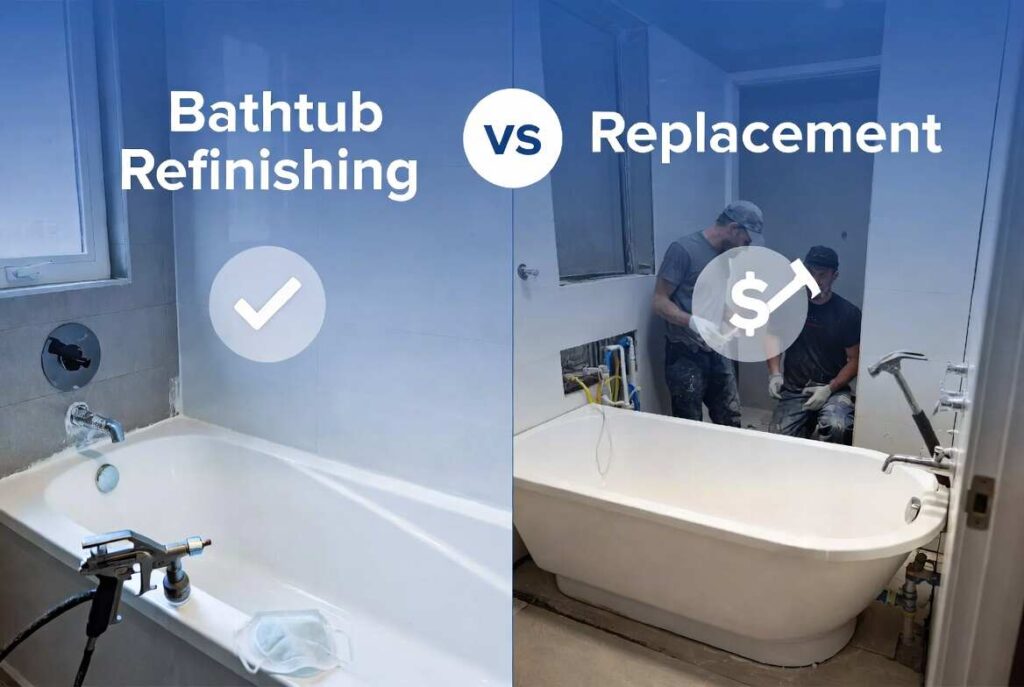

Bathtub refinishing gives an old tub a fresh surface without the cost and mess of a full replacement. Many homeowners wonder how long the new finish will hold up under regular use. The answer depends on several practical factors, but a good professional job often provides years of reliable service.
This guide explains what to expect from bathtub refinishing. It covers the typical time frame, what influences the results, and steps you can take to get the most out of the investment. You will find clear advice based on how these jobs perform in actual homes.
The Typical Lifespan of a Refinished Bathtub
A professionally refinished bathtub usually lasts between 10 and 15 years with normal use and good care. Some finishes stay in good shape even longer, up to 15 to 20 years in lightly used bathrooms. This range comes from many real-world examples where homeowners follow basic maintenance steps.
Lower quality work or DIY kits often last only 2 to 5 years. These shorter results happen because of weaker materials or incomplete preparation. In busy families with daily showers, the finish may show wear closer to the 10-year mark. Guest bathrooms that see less traffic can easily reach the higher end of the range.
The finish does not last forever like a brand-new factory tub, but it offers strong value for the price. Many people find that refinishing extends the life of their current tub enough to delay a bigger project.
Key Factors That Determine Longevity
Several things decide how long your refinished tub will perform well. The first is the quality of the materials and the skill of the person doing the work. Professional teams use coatings designed for wet environments, often similar to automotive finishes that resist moisture and wear.
Budget contractors or cheap kits may use thinner or less resistant products. These can peel or lose gloss much sooner. Always check reviews, ask for references, and find out what type of coating the company plans to apply.
The Role of Surface Preparation
Preparation makes the biggest difference in how well the new coating sticks. Good prep includes thorough cleaning to remove soap scum, oils, and old residue. Workers repair chips, fill cracks, sand the surface, and apply an etching solution so the primer bonds strongly.
When prep work is rushed, the coating does not hold properly. Water can get underneath and cause peeling, especially around the drain or edges. A skilled job spends most of the time on these steps before any coating goes on. This attention leads to finishes that last the full 10 to 15 years.
How Daily Use Affects the Finish
The way a household uses the tub plays a large part in its lifespan. Families with children, frequent baths, or heavy daily showers put more stress on the surface. Hot water, soap, and body oils add up over time.
In contrast, a tub used mainly for occasional showers in a spare bathroom faces less wear. Hard water areas can leave mineral deposits that dull the shine if not wiped away regularly. Simple habits like rinsing after use help reduce buildup and keep the surface looking better longer.
Maintenance Practices That Extend Life
Proper care after refinishing is essential. Use only non-abrasive, liquid cleaners such as mild dish soap, diluted white vinegar, or bathroom sprays labeled safe for acrylic or refinished surfaces. Avoid powdered cleaners, bleach, ammonia, or anything with grit that can scratch the coating.
Wipe the tub dry with a soft cloth after each use to prevent water spots and mineral deposits. This step takes less than a minute but makes a noticeable difference over years. Do not use bath mats with suction cups, as they can pull on the finish when removed and trap moisture.
Check the caulk around the tub regularly and replace it when it cracks or pulls away. Good caulk stops water from sneaking behind the coating. Fix any leaky faucets quickly because constant dripping wears spots in the finish.
First Days After Refinishing
The initial curing period sets the foundation for long-term performance. Most professionals recommend waiting 24 to 48 hours before using the tub. Keep the room ventilated but avoid extreme temperature changes during this time. Do not place bottles, mats, or other items on the surface while it hardens.
Follow the specific instructions from your refinisher. Some coatings need a full week before heavy cleaning or soaking. Rushing this step can soften the finish and shorten its life from the start.
Common Problems and How to Avoid Them
Many early failures come from preventable mistakes. Abrasive cleaners create tiny scratches that collect dirt and make the tub look dull. Suction cup mats are a leading cause of peeling in the first few years. Standing water from poor ventilation or leaks also weakens the bond.
Heavy objects dropped in the tub can chip the surface. Keep shampoo bottles and razors in holders or on shelves instead of on the edge. In households with pets, avoid bathing them in the refinished tub because claws can scratch it.
Signs That Your Refinished Tub Needs Attention
Watch for gradual changes rather than sudden failure. Loss of gloss, small scratches, or areas that stain more easily often appear first in high-use spots like the bottom or near the drain. Minor chips or discoloration that cleaning cannot fix may need a touch-up.
Peeling, bubbling, or larger cracks mean the coating is breaking down. Contact a professional right away for these issues. Early repairs can extend the life without a full redo. After 10 years or more, the finish may simply need refreshing if the tub structure remains solid.
Cost Savings and Return on Investment
Refinishing offers strong savings compared to a full bathroom update. The money you save can go toward other improvements like new fixtures, paint, or lighting. Many homeowners report that the refreshed look increases satisfaction with their bathroom for years.
Over a 15-year period, the cost per year for a quality refinishing job is low. Factor in proper care, and you get reliable daily use without the hassle of construction dust and downtime.
If you’re still deciding between refinishing and buying a new tub, read our guide on Bathtub Refinishing vs Replacement: Which Wins? to compare the costs, benefits, and long-term value.
Choosing the Right Professional
Not every refinishing service delivers the same results. Look for companies with experience, clear warranties, and before-and-after photos of their work. Ask about the exact products they use and how they handle preparation. A reputable provider stands behind the job with a warranty of several years.
Get multiple quotes and read recent customer feedback. The cheapest option often cuts corners on materials or prep time, leading to earlier problems. A slightly higher price for better work pays off in longer performance.
Myths About Bathtub Refinishing
Some people believe refinished tubs chip easily or do not hold up at all. In reality, professional coatings resist normal use when cared for correctly. Another myth is that DIY kits work just as well. Most homeowners who try kits see poor adhesion and short life because they lack the right tools and experience.
Refinishing is not a permanent fix, but it is not meant to be. It provides a practical, attractive solution for many years. You can refinish the tub again later if needed, as long as the base remains in good shape.
Practical Tips for Everyday Care
Develop a simple routine. Rinse the tub after showers, wipe it dry, and do a gentle weekly cleaning. Use a soft sponge or microfiber cloth. For hard water spots, let a vinegar solution sit for a few minutes before wiping. Avoid letting soap scum build up.
Improve bathroom ventilation with an exhaust fan to reduce humidity. In winter, watch for dust and temperature swings that can affect surfaces. These small steps add up to better appearance and fewer issues over time.
When to Consider Refinishing Again
After the original finish has served its time, you can have the tub refinished once more. Professionals can apply a new coating over the old one in many cases, provided the surface is prepared well. This approach continues to save money compared to repeated replacements.
Plan ahead by maintaining the tub well so the second refinishing goes smoothly. Many people stay with the same company for follow-up work because they already know the tub’s history.
Making the Decision for Your Home
Think about your tub’s current condition, your budget, and how long you plan to stay in the house. For most homes where the tub is solid but looks worn, refinishing provides a smart, low-disruption upgrade. You get a clean, modern appearance quickly and at a fraction of replacement cost.
Talk to a few local professionals to assess your specific tub. They can point out any issues that might affect the outcome and give honest advice on whether refinishing or replacement makes more sense.
Final Thoughts
Bathtub refinishing offers a practical way to update your bathroom without major expense or effort. With quality work and consistent care, you can expect 10 to 15 years or more of good service from the new finish. Focus on proper preparation, gentle cleaning, and daily wipe-downs to protect your investment.
This approach helps many homeowners enjoy their space longer while keeping costs under control. If your tub needs attention, consider refinishing as a solid option that delivers real results for everyday living. Take time to choose an experienced provider, follow the care guidelines, and you will get the full value from the project.