The first day can determine the finish quality
A newly applied coating may look complete long before it has fully cured. Follow the contractor’s specific no-touch and no-water periods.
Keep cleaning gentle after curing
Use only nonabrasive cleaners and soft cloths permitted by the coating manufacturer. Avoid experimenting with new chemicals on a fresh finish.
Prevent standing water and dripping
Water repeatedly collecting around drains or hardware can wear vulnerable boundaries. Repair leaks and keep seams in good condition.
Avoid suction mats and hard objects where prohibited
Suction cups may pull at coatings and rough containers may scratch them. Use non-damaging alternatives consistent with your refinisher’s instructions.
Recognize early coating problems
Bubbles, peeling edges, tackiness or unusual discoloration warrant prompt contact with the installer. Do not sand or cover the defect yourself if warranty applies.
Care for caulk and hardware as a system
Sealant may have a separate cure time, and metal fittings may have cleaning restrictions. Keep water out of the wall joint and check for leaks.
Keep your handover record
Save coating details, dates, warranty documents and approved products. A consistent care routine makes future troubleshooting more reliable.
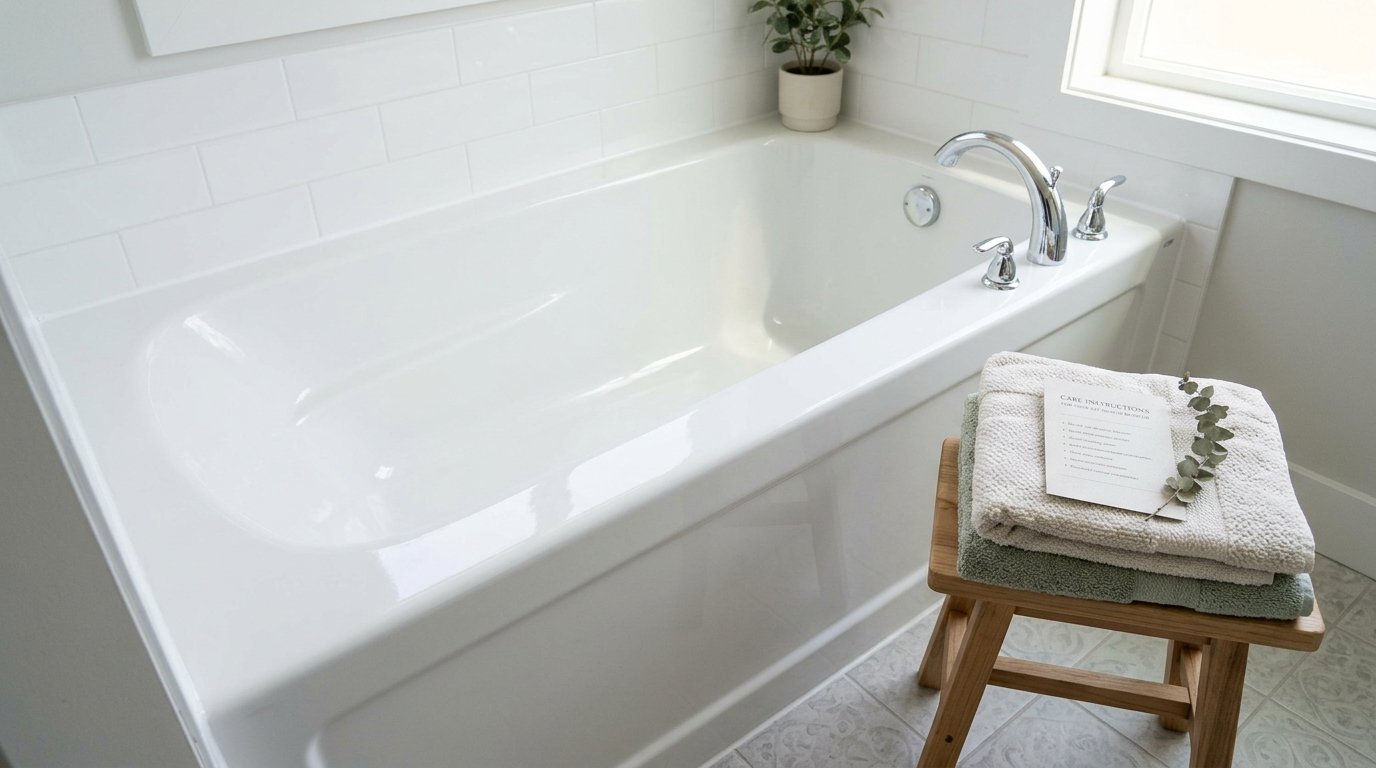
Illustrative scenario: A freshly coated tub may look ready before the applicator's cure instructions permit bathing. Keep those instructions visible and avoid installing a suction-cup mat or using harsh cleaners without permission. A slow dripping faucet can keep the new surface wet in one place. Early aftercare is about protecting the finish while spotting any problems that should be reported under warranty.
Keep the aftercare instructions where you can find them
- Record the exact earliest bathing and cleaning times supplied for the coating system.
- Avoid suction mats and hard accessories if the coating provider specifically warns against them.
- Dry leaks at taps and follow the specified gentle cleaning routine.
- Report lifting edges, persistent tackiness, or early cracking while documentation and warranty details are available.
The decision: New coating needs product-specific care. Do not assume a previously refinished surface tolerates the same chemicals as factory porcelain or acrylic.