 Tub Materials
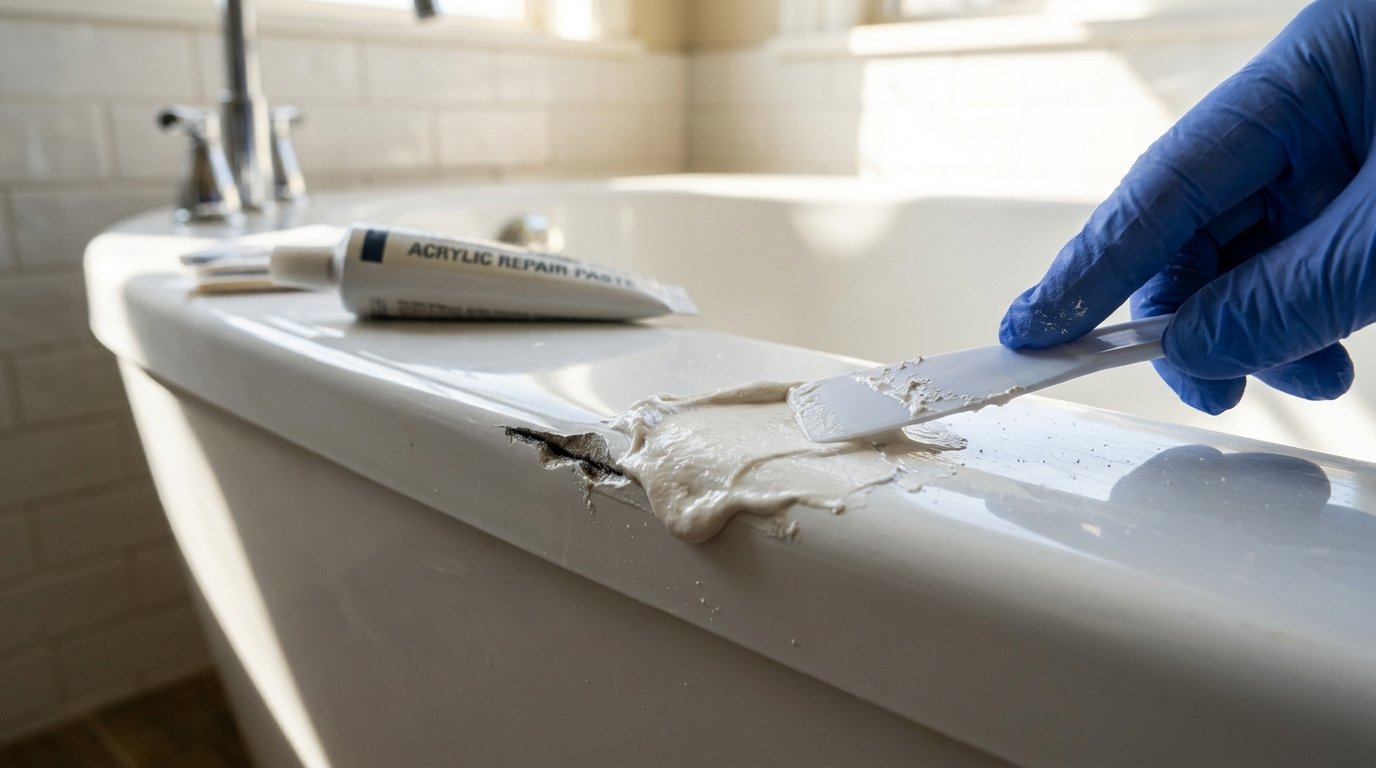
Repairing Acrylic Tubs: Common Damage and Best Options
Acrylic is popular because it can form smooth, attractive bath shapes, but it can be scratched, chipped or cracked. Different depths of…
Understand the properties of acrylic, fiberglass, porcelain, enamel, cast iron and composite bath surfaces.
Acrylic is popular because it can form smooth, attractive bath shapes, but it can be scratched, chipped or cracked. Different depths of damage call for different solutions.
Read this guide →Tub MaterialsAcrylic is popular because it can form smooth, attractive bath shapes, but it can be scratched, chipped or cracked. Different depths of…
 Tub Materials
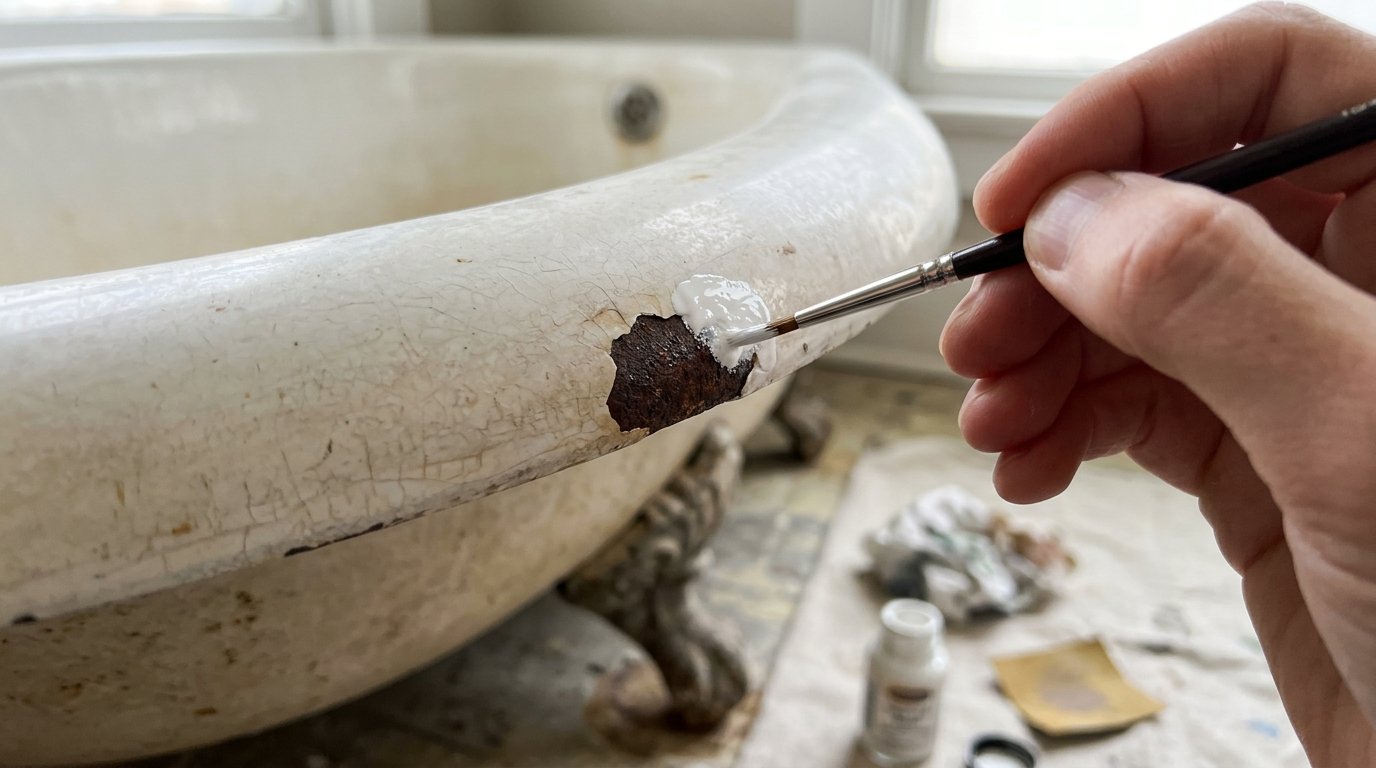
Fiberglass bathtub repairs begin with understanding the layers under the visible finish. Restoring shine on top is not the same as…
 Tub Materials
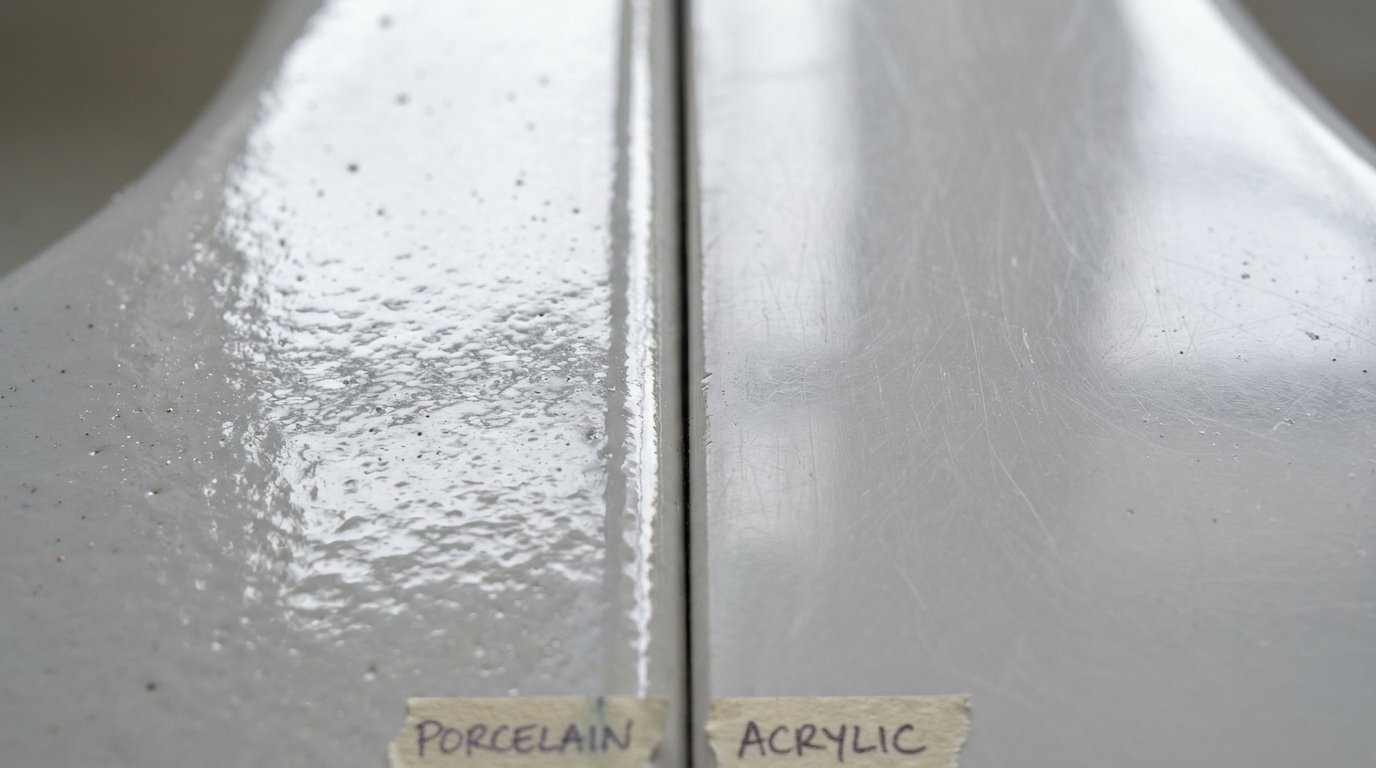
Acrylic and porcelain can appear nearly identical across a bathroom, yet their repair methods are not interchangeable. The material beneath…
 Tub Materials
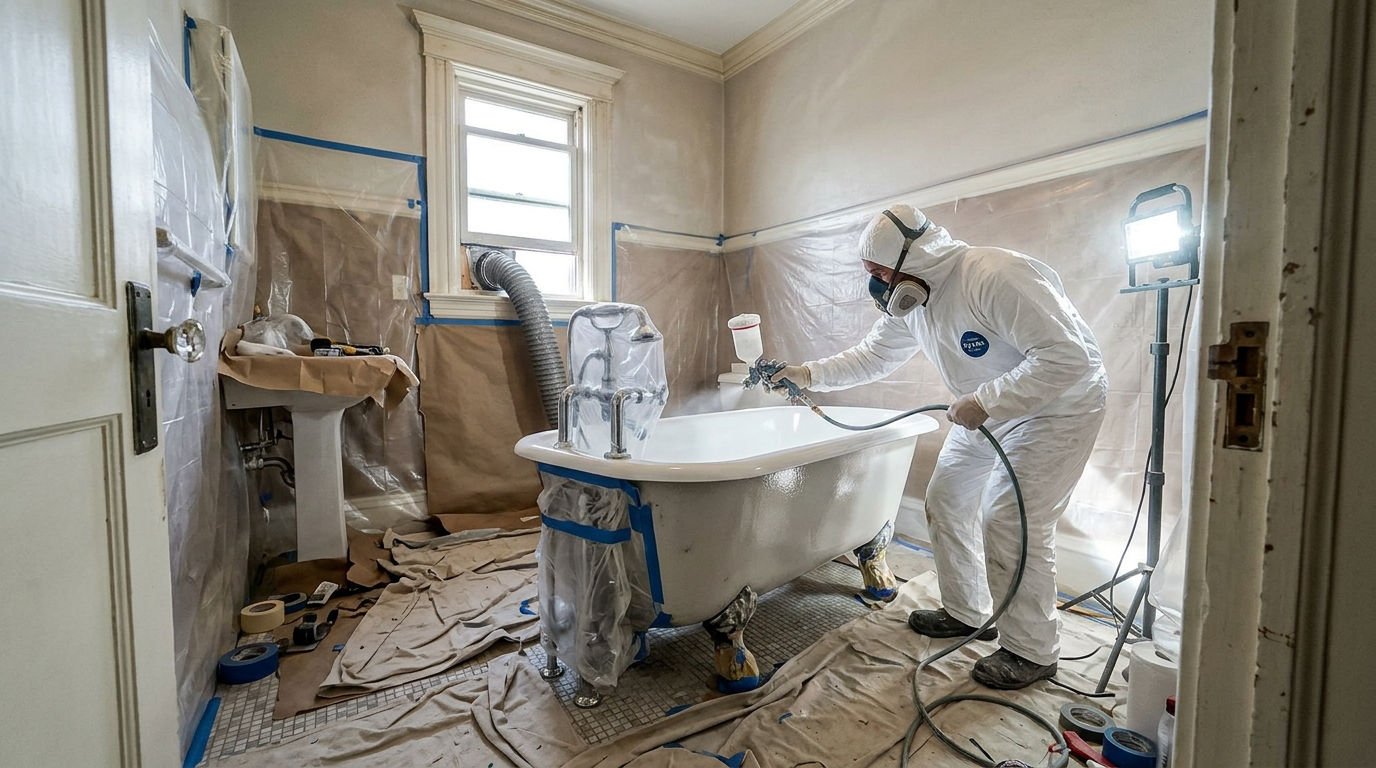
Keeping a handsome cast-iron bath in place can avoid major demolition. Refinishing may make sense when the body is sound, but a new coating…
 Tub Materials
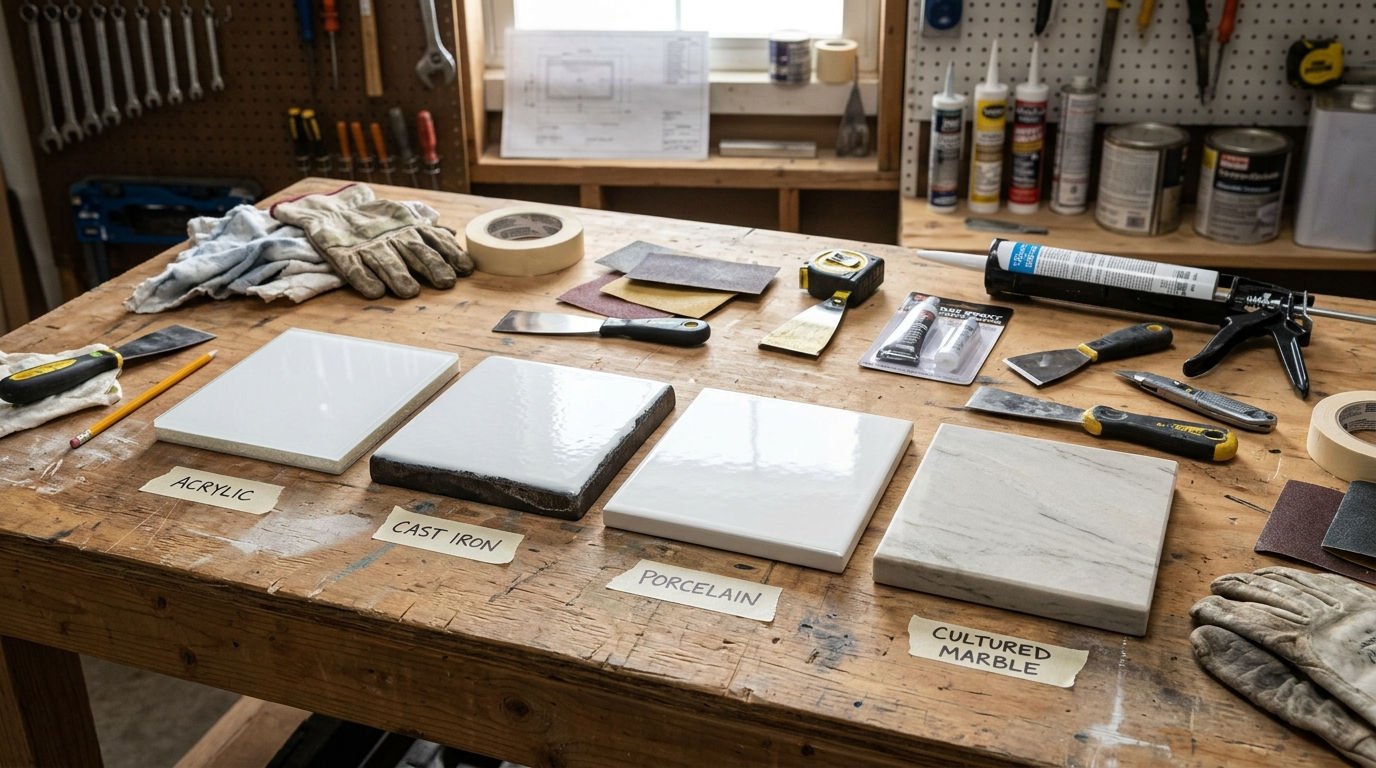
Before buying cleaners, fillers or coatings, find out what your tub is made of. A few non-destructive observations can narrow the…
 Tub Materials
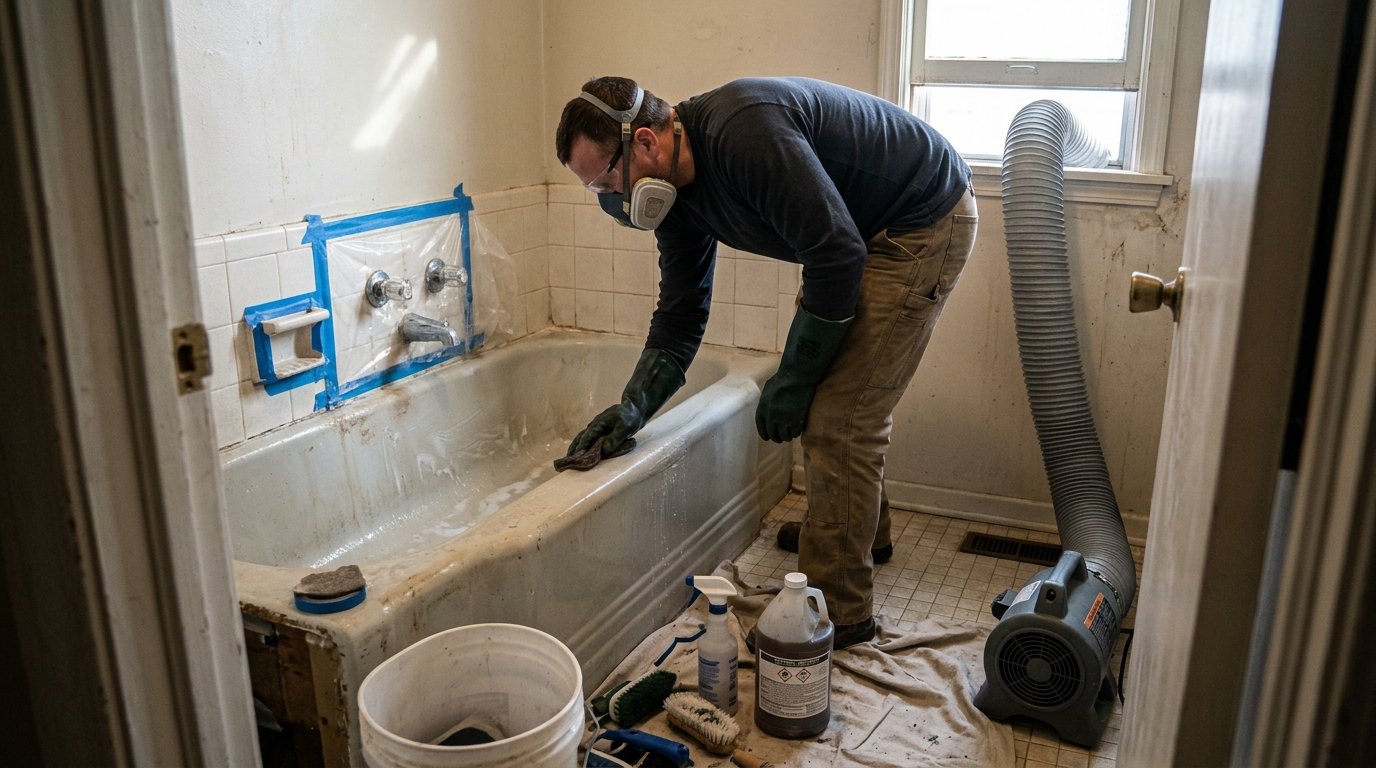
An enamel-coated bathtub can be worth restoring, especially when its cast-iron or steel shell remains sound. The approach depends on whether…
 Tub Materials
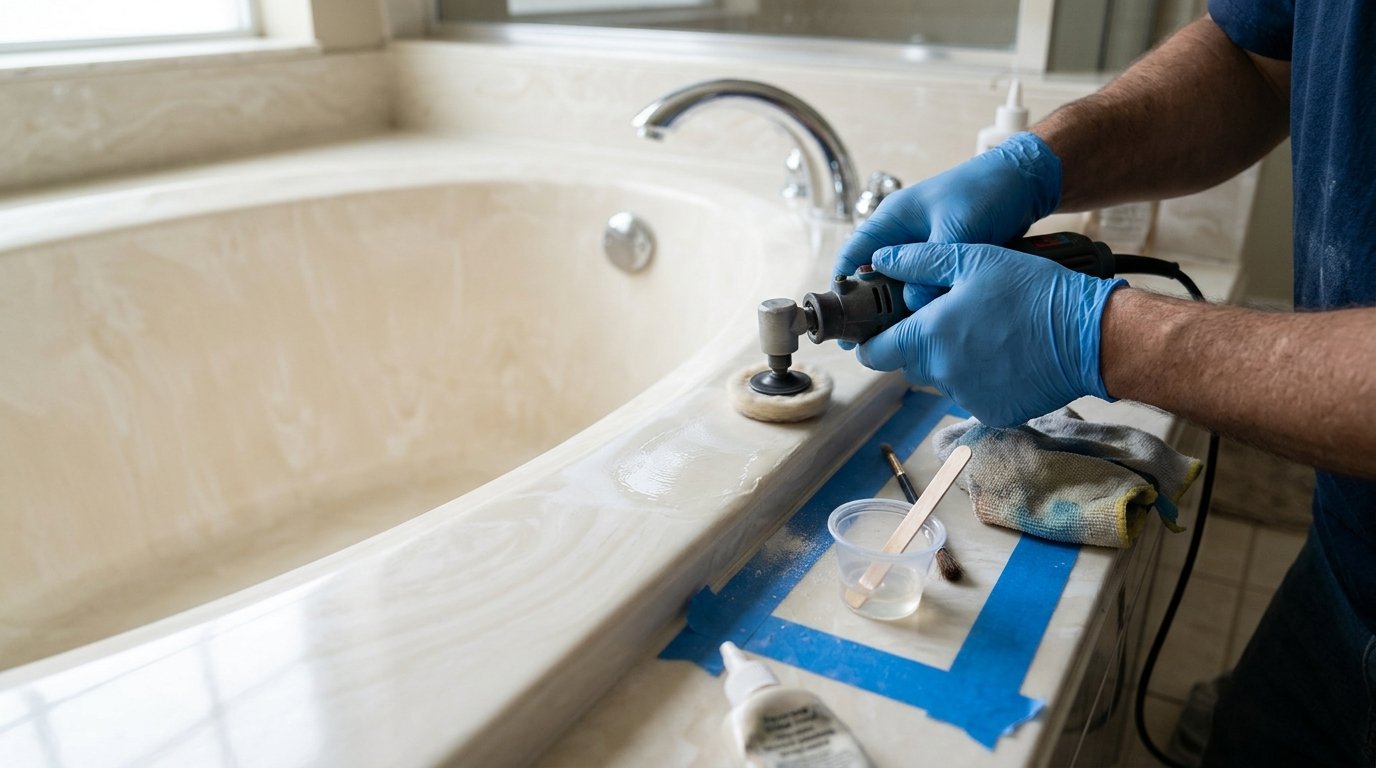
Cultured marble baths have a polished composite surface that needs different care from both stone and ordinary acrylic. What looks like a…
 Tub Materials
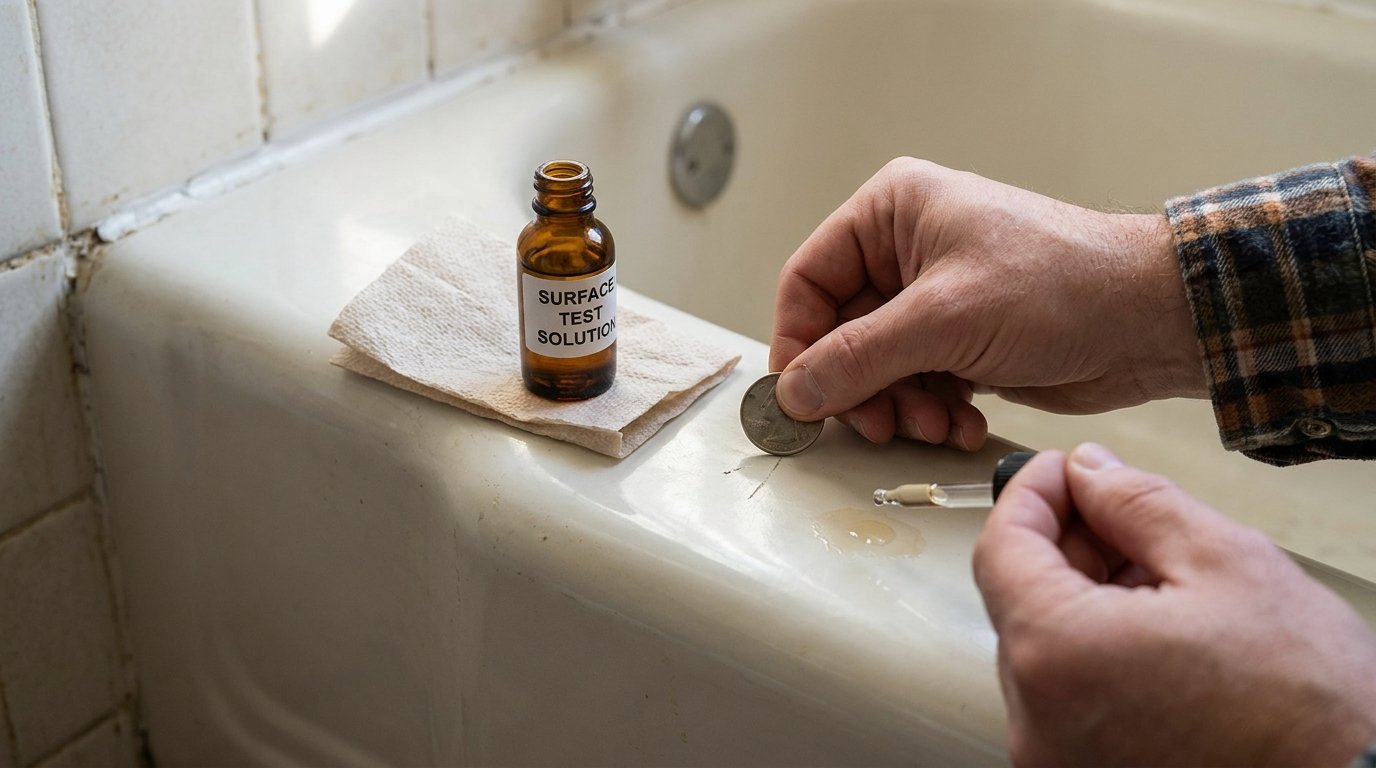
The same visible defect may need a completely different solution in a porcelain, acrylic or fiberglass tub. Material identification can save…